Sign-up to our newsletter and we'll also send you our free ebook on Navigating Social Situations.
Imagine confidently joining any dinner party, indulging in holiday feasts guilt-free, and making lasting memories, all while edging closer to your goals. Sign up now!
You will receive an email from us soon.
Hmm.. something went wrong. If the issue persists, please contact us.
The holidays are coming, and a lot of people want to head into them a little lighter. Ten pounds is a common goal. With the right pace and a simple way to track, it's realistic for many people, even with Thanksgiving and holiday parties along the way.
Quick answer: If you start in early November, you have about seven to eight weeks until Christmas. Losing 10 pounds in that time means about 1.25 to 1.5 pounds a week, which is a sensible pace for most people who weigh around 150 pounds or more. The best way to track is an app that sets your calorie and protein targets, follows your weight trend, adjusts your plan each week, and lets you plan around big holiday meals. Carbon does all four.
Why aim for it before the holidays?
Start January ahead. Most people spend the new year trying to undo the holidays. Making progress now means you start the year from a lower number instead of starting over.
Room for the big meals. A holiday dinner can push the scale up for a few days, mostly from water and salt. Progress made before then gives you a cushion, so a rough few days doesn't wipe out your work.
Habits that carry into January. Logging and checking in through the holidays is the hard part. If you keep the habit going in December, January takes care of itself.
150 lb: about 0.75 to 1.5 lb a week, or 6 to 12 lb total
180 lb: about 0.9 to 1.8 lb a week, or 7 to 14 lb total
220 lb: about 1.1 to 2.2 lb a week, or 9 to 18 lb total
If you weigh less, 10 pounds may take a bit longer at a healthy pace, and that's fine. Losing 6 or 7 pounds and keeping your habits through the holidays is still a strong finish to the year.
Expect the first week or two to move faster as your body lets go of some water. After that, a steady weekly trend matters more than any single weigh-in.
Why the holidays make this harder
In a study of 195 adults weighed through the year, people gained a little less than a pound on average between Thanksgiving and New Year's. That sounds small, but they didn't lose it afterward. The authors noted that holiday weight gain tends to stick and add up year after year.
That's why it helps to plan for the holidays instead of hoping to make up for them in January. You don't need to skip every party. You need a plan for the big meals and a simple way to stay consistent between them.
The best way to track what you eat
Tracking consistently is one of the habits most linked to weight loss. A systematic review on self-monitoring found a consistent link between tracking what you eat and losing weight. For a holiday goal, look for an app that does more than count:
Targets set for your goal: Calories and protein based on your body, your goal, and a sensible rate of loss.
Your weight trend: Progress judged across weeks of weigh-ins, so one salty dinner doesn't throw you off.
Weekly adjustments: Your targets change when your progress does, so you don't stall halfway to Christmas.
A way to plan big meals: Room for Thanksgiving dinner or a holiday party without blowing up your week.
Fast logging: A verified food database, barcode scanning, and quick ways to log meals you didn't cook.
How Carbon does it: Set a fat loss goal and Carbon builds protein-forward targets with guardrails on how fast you lose. At each weekly check-in, Carbon compares what you logged with your targets, reads your weight trend across weeks, and adjusts your plan with an explanation of every change. The Calorie Planner lets you move calories between days for holiday meals, and the Smart Logger lets you log a meal from a photo or a quick description, matched to Carbon's verified food database.
Weigh in regularly
Stepping on the scale helps during the holidays. In the Winter Weight Watch Study, adults who weighed themselves regularly and got simple tips on holiday eating finished the season about a pound lighter than a comparison group who didn't.
Weigh in a few times a week, ideally first thing in the morning. Carbon uses your multi-week weigh-in averages to read your trend, so a high reading after a big meal doesn't lead to the wrong adjustment.
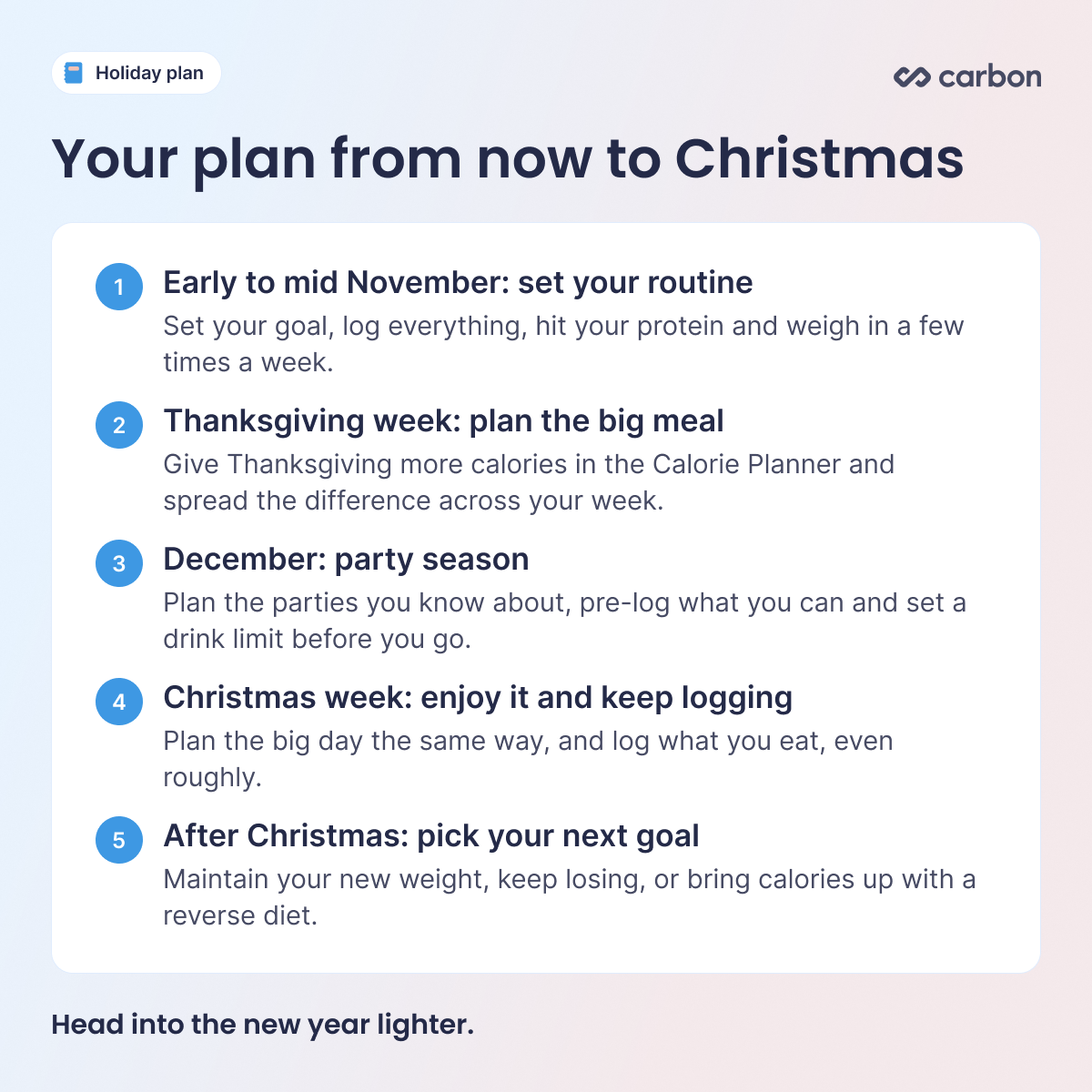
Your plan from now to Christmas
Early to mid November: set your routine
Set your goal and a sensible rate of loss.
Log everything you eat, even when it's an estimate.
Hit your protein target every day.
Weigh in a few times a week.
Thanksgiving week: plan the big meal
Use the Calorie Planner to give Thanksgiving more calories and spread the difference across the rest of your week.
Eat normally earlier in the day. Skipping meals usually leads to overeating later.
Fill your plate with turkey and vegetables first, then pick the sides and desserts you care about most.
Log the meal, using estimates where you need to.
December: party season
Look ahead at your week and plan the parties and dinners you know about.
Pre-log what you can, and set a drink limit before you go.
Keep protein steady on the days in between.
Christmas week: enjoy it and keep logging
Plan the big day in the Calorie Planner, the same way you did for Thanksgiving.
Log what you eat, even roughly. Staying in the habit makes January much easier.
How to handle holiday meals
Start with protein: Turkey, ham, or another lean protein helps keep you full.
Pick your favorites: Choose the dishes you only get once a year and skip the ones you can have any time.
Watch the extras: Gravy, butter, and dressings add up fast. Take a smaller portion or ask for them on the side.
Log a little extra: Home and restaurant cooks often add oil and butter you can't see. A tablespoon of oil is about 120 calories.
Plan drinks: Alcohol has about 7 calories per gram and doesn't fill you up. Decide how many you'll have and log them like food.
Protein helps you hold on to muscle while you're losing fat, so more of what you lose comes from fat. A systematic review of lean, resistance-trained dieters suggested higher protein intakes during a calorie deficit. Carbon uses 2.2 g of protein per kg of lean body mass as a starting point and gives you a range based on your goal.
What to expect on the scale
Holiday meals are often saltier and higher in carbs, which can push scale weight up for a few days through water. That's normal and usually not fat. Give it a few days, stay consistent, and judge your progress by your weight trend over several weeks.
After Christmas
If you're happy with where you landed, switching to a maintain weight goal helps you settle at your new weight. If you have more to lose, keep going into the new year. If you've been dieting for a while and want to bring calories back up gradually, Carbon's reverse diet goal is built for that.
FAQ
How much weight can I lose by Christmas?
At 0.5 to 1% of your body weight per week, most people can lose about 5 to 15 pounds over seven to eight weeks, depending on their starting weight. Heavier people can usually lose more at the same healthy pace.
Is losing 10 pounds in 8 weeks safe?
For many people, yes. It works out to about 1.25 pounds a week, which is within a sensible range for most people who weigh around 150 pounds or more. If you weigh less, aim for a smaller goal. If you have a medical condition, check with your doctor first.
What's the best app to track food for holiday weight loss?
Look for an app that sets your calorie and protein targets, uses your weight trend, adjusts your plan weekly, and lets you plan around big meals. Carbon does all four, with weekly check-ins and a Calorie Planner for holiday meals.
Should I eat less before Thanksgiving dinner?
Eat normally earlier in the day so you don't arrive starving. Use the Calorie Planner to give the day more calories and spread the difference across the rest of your week.
What if I gain weight after a holiday meal?
A jump after a big meal is mostly water from extra salt and carbs. Go back to your usual targets, keep logging, and look at your trend over the next week or two.
The bottom line
Losing 10 pounds by Christmas is realistic for many people with a steady pace and a plan for the big meals. Set a sensible goal, log what you eat, keep protein high, weigh in regularly, and plan Thanksgiving and holiday parties ahead of time. You'll head into the new year lighter and with habits that keep working in January.
Try Carbon free for 7 days. Set your goal, log your food, and check in each week. Carbon adjusts your macros based on your actual progress. Start your free trial.
Share
John Ybarra, NBC-HWC, CSCS
John is a National Board Certified Health & Wellness Coach and Certified Strength and Conditioning Specialist who has coached people through fitness, nutrition, and behavior change for nearly two decades, including as a health coach at Vida Health and leading wellness programs at the YMCA. He is VP of Operations at Carbon Diet Coach.