Sign-up to our newsletter and we'll also send you our free ebook on Navigating Social Situations.
Imagine confidently joining any dinner party, indulging in holiday feasts guilt-free, and making lasting memories, all while edging closer to your goals. Sign up now!
You will receive an email from us soon.
Hmm.. something went wrong. If the issue persists, please contact us.
Starting resistance training can feel overwhelming, especially if you’re new to the gym or unsure whether you’re “doing it right.”
You might be asking yourself:
Am I lifting heavy enough?
Should I be sore after every workout?
Is this routine actually working?
The good news? You don’t need a perfect program, advanced techniques, or extreme workouts to make progress.
This guide breaks down what actually matters in resistance training, how beginners should structure their workouts, and how nutrition and macro tracking support strength gains — all in a way that feels simple, realistic, and sustainable.
What Resistance Training Really Is (And What It’s Not)
Resistance training is any form of exercise where your muscles work against a load. That load can come from:
Dumbbells or barbells
Resistance bands
Machines
Your own bodyweight
It’s not about:
Training to failure every set
Feeling exhausted after every workout
Following complicated routines
For beginners, the goal is simple: Learn movement patterns, build consistency, and gradually get stronger over time.
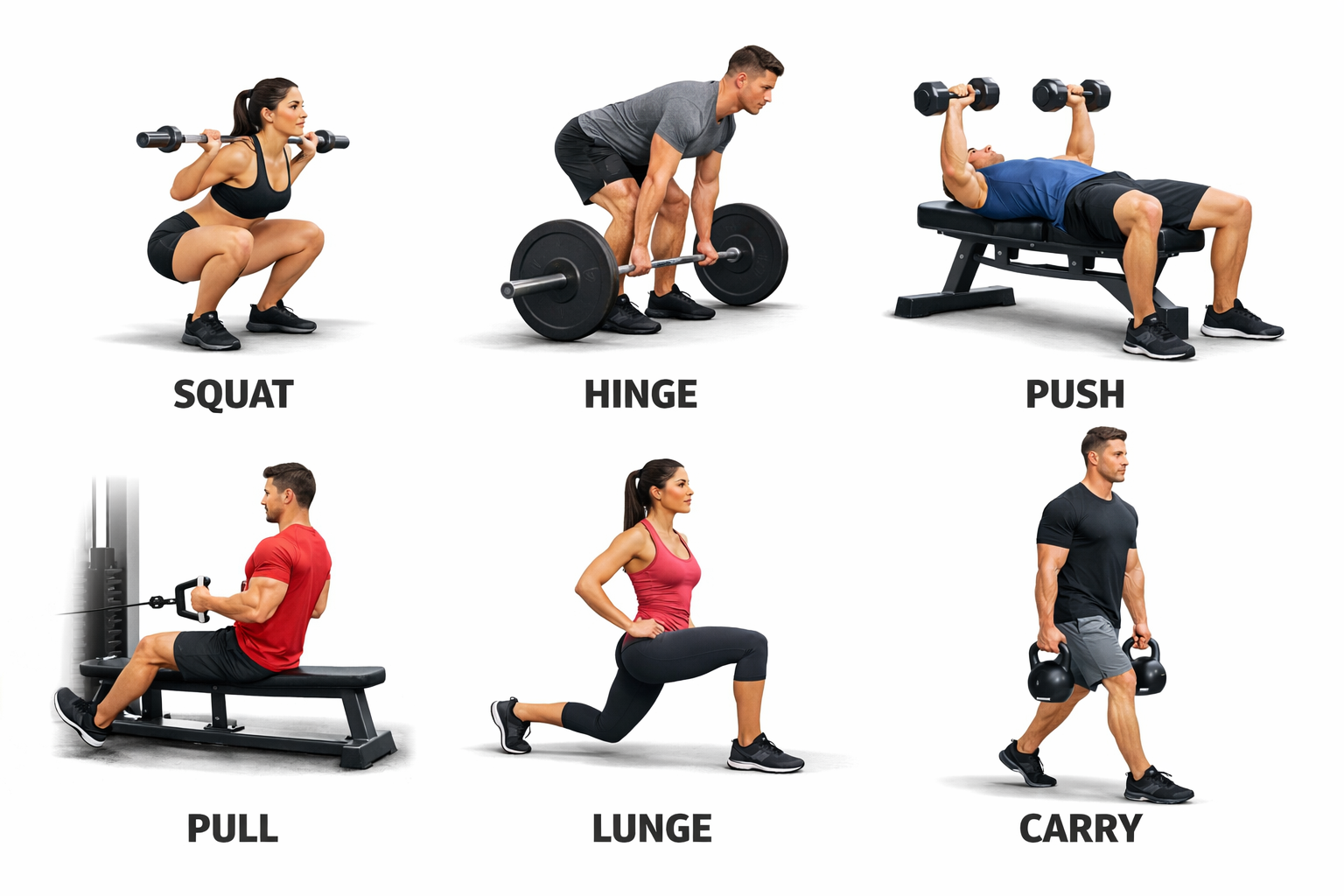
The 6 Movement Patterns Every Beginner Should Learn
Instead of memorizing dozens of exercises, focus on mastering these six foundational movement patterns:
If your program includes these patterns consistently, you’re training effectively.
Beginner Training Structure That Actually Works
More volume and complexity do not equal better results — especially early on.
For most beginners, these structures work best:
✔️ Full-Body Training (2–3x/week)
Each workout includes a squat, hinge, push, pull, and core movement.
✔️ Upper / Lower Split (3–4x/week)
One day focuses on upper body, the next on lower body.
Both options allow:
Enough recovery
Repeated practice of movements
Steady strength progression
Consistency matters far more than the “perfect” split.
What Progress Should Look Like (Besides Soreness)
A common misconception is that soreness equals success. In reality, soreness is just a sign your body experienced something new.
Better signs of progress include:
Lifting slightly heavier over time
Performing more reps with the same weight
Improved control and confidence
Better recovery between workouts
Feeling stronger in daily life
If any of those are happening, your training is working.
How Nutrition Supports Resistance Training
Strength training doesn’t happen in isolation — nutrition plays a major role.
Key priorities:
Protein: Supports muscle repair and growth
Carbohydrates: Fuel workouts and performance
Calories: Support recovery and adaptation
When calories or protein are too low, progress often stalls — regardless of how hard you train.
This is where Carbon Diet Coach becomes a powerful tool. Tracking macros helps ensure your body has what it needs to recover, adapt, and get stronger without guesswork.
Common Beginner Mistakes to Avoid
Many beginners unknowingly slow their progress by:
Changing workouts too often
Avoiding strength increases out of fear
Training inconsistently
Undereating protein
Expecting fast physical changes
The fix isn’t more intensity — it’s better consistency and patience.
How Carbon Helps Beginners Train With Confidence
Carbon supports resistance training progress by:
Providing clear macro targets to support training
Adjusting nutrition weekly based on real data
Encouraging sustainable habits instead of extremes
Helping you focus on long-term trends
You don’t need to guess whether you’re “doing enough.” You just need to show up consistently — Carbon handles the rest.
Conclusion: Simple Training Done Consistently Wins
If you’re new to resistance training, remember:
You don’t need perfection. You don’t need advanced routines. You don’t need to be sore every workout.
You need:
Simple structure
Consistency
Proper fueling
Time
Do that, and progress will follow.
Share
The smart diet coaching app created by nutrition experts to help you achieve long lasting results.




.jpg)