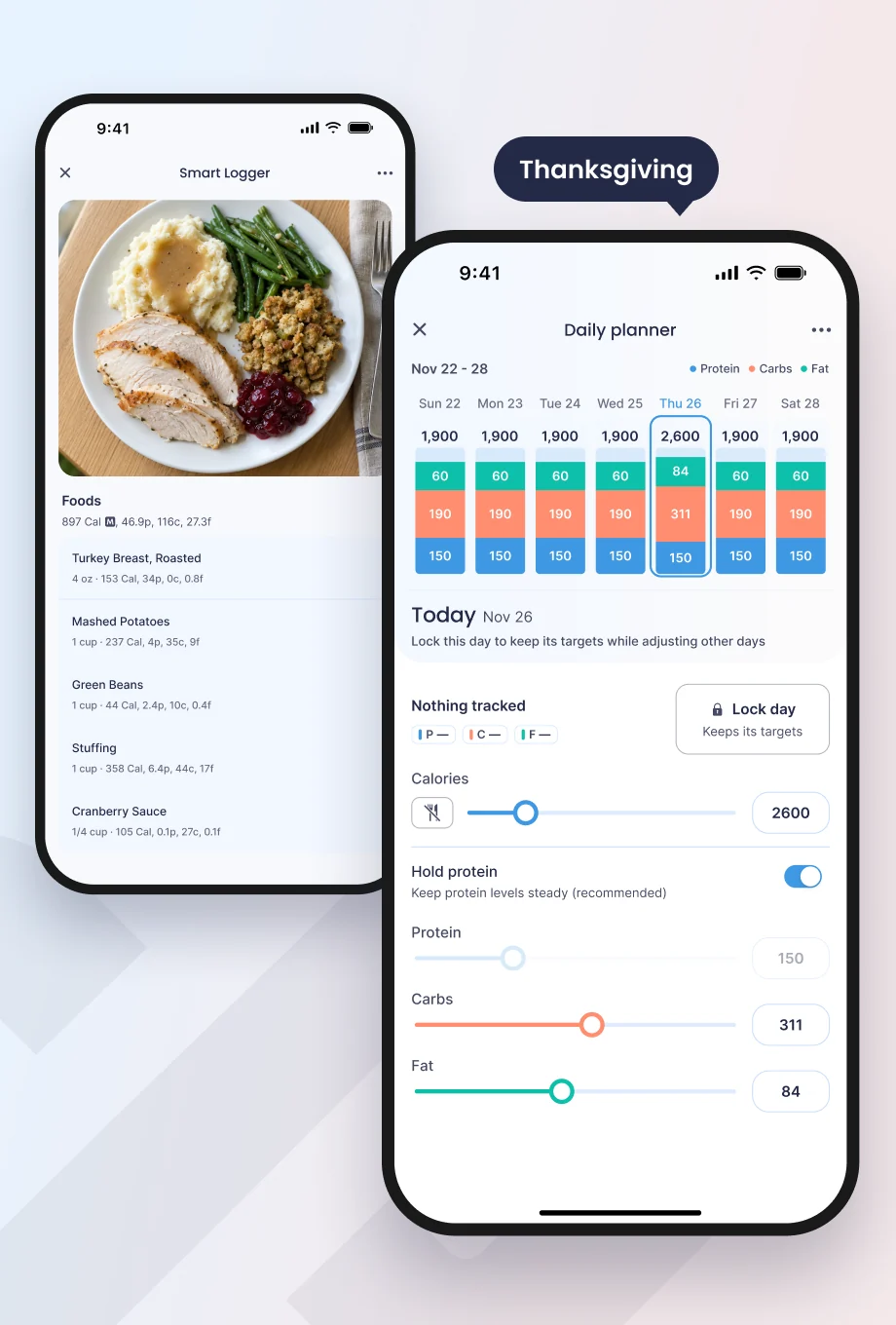
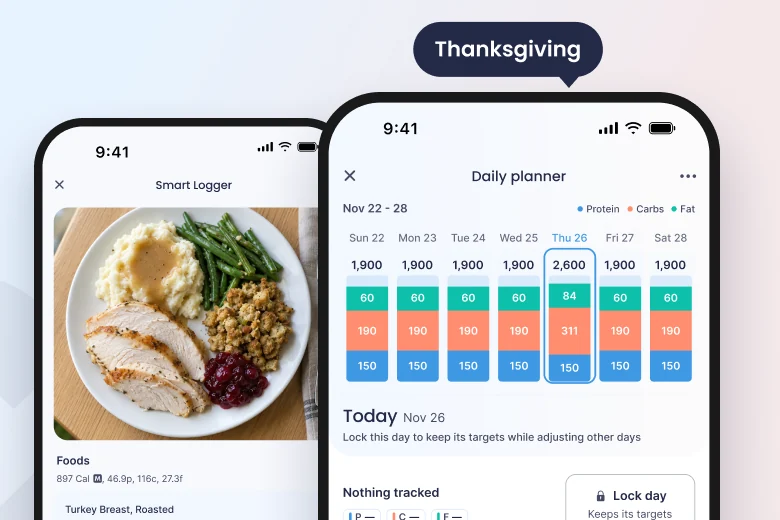
Enjoy the holiday meals you love and still make progress. Carbon builds a plan for your body, then adjusts it weekly so you start January closer to your goal.
If your progress feels inconsistent, it usually is not because you are not putting in effort.
You are making better choices. You are paying more attention. You are trying to do the right things.
That matters.
At the same time, body composition changes are not driven by a few good days or even a single strong week. They are built over months and years of behavior that holds up often enough to produce a clear trend.
When those behaviors are a little off, progress can feel slow, stalled, or unpredictable.
Why It Feels Like You’re Doing Everything Right
Most people can point to real examples of effort.
You had days where your meals were on point. You made it to the gym. You were more mindful than you used to be.
Those are meaningful improvements.
The challenge is that progress reflects your overall pattern over time. When that pattern includes gaps in accuracy, consistency, or follow-through, it becomes harder to see steady change.
It can feel like you are doing everything right, while the long-term pattern tells a slightly different story.
The difference is often in the decisions you repeat.
Where the Gap Usually Shows Up
The gap is rarely about effort. It shows up in the details that are easy to overlook.
Accuracy
Meals are estimated more than they are measured. Small additions are missed. Portions slowly drift. Over time, these small differences can shift your intake more than expected.
Consistency
Workouts and nutrition are strong at times and less structured at others. A plan that calls for three sessions per week might average closer to one or two. Logging may start consistently, then taper off when the week gets busy.
Follow-through
Plans change frequently. Meals are adjusted on the fly. Structure is replaced with decision-making in the moment, which tends to vary more than expected.
Pacing
Short periods of strong execution are followed by less structured stretches. Progress requires those stronger periods to be repeated often enough to create momentum over time.
None of these stand out on their own. Over months, they shape the overall direction of your results.
Decisions are easier when options are already set.
What Actually Drives Progress Over Time
Long-term progress comes from behaviors you can repeat.
Not perfectly, but consistently enough that your intake, training, and routines form a pattern you can rely on.
That usually includes:
Logging intake with accuracy
Staying within a consistent range of your calorie target
Following a training schedule that matches your plan most weeks
Building meals and routines that you can return to without much thought
When these are in place, your progress becomes easier to understand. You can see what is working and make adjustments based on real patterns, not guesswork.
Make Your Plan Easier to Sustain
If results have felt inconsistent, it is often worth simplifying your approach.
Focus on making your plan easier to follow over the long term:
Keep a small rotation of meals that fit your targets
Plan ahead for parts of your week that tend to be less structured
Revisit portion sizes and tracking habits to improve accuracy
Choose a training schedule you can realistically maintain
These are not short-term fixes. They are habits that support consistency over months and years.
Success is defined by what you repeat, not what you intend.
The Takeaway
Effort is where progress starts. Consistency is what carries it forward.
When your habits are accurate enough and repeatable enough over time, results begin to reflect that.
And when you can rely on your process, progress stops feeling unpredictable and starts to build in a much more steady direction.
Share
Carbon Diet Coach
The smart diet coaching app created by nutrition experts to help you achieve long lasting results.