Sign-up to our newsletter and we'll also send you our free ebook on Navigating Social Situations.
Imagine confidently joining any dinner party, indulging in holiday feasts guilt-free, and making lasting memories, all while edging closer to your goals. Sign up now!
You will receive an email from us soon.
Hmm.. something went wrong. If the issue persists, please contact us.
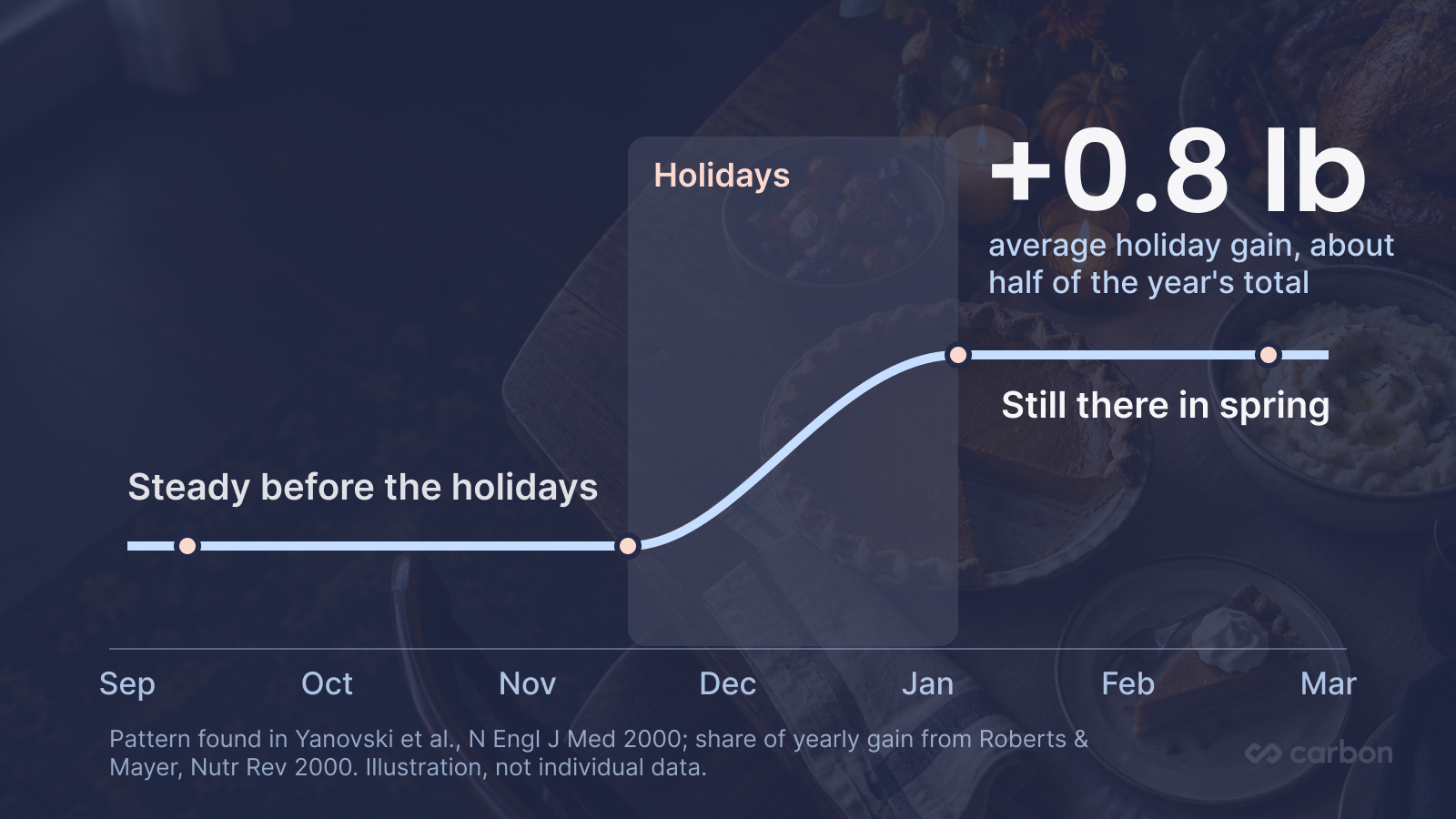
Quick answer: Most people gain less than a pound over the holidays, far less than the "7 to 10 pounds" you often hear. The problem is that it usually sticks. In the best-known study on this, holiday weight wasn't lost over the following spring and summer, and that short stretch accounted for about half of people's weight gain for the entire year.
The good news: researchers have also tested what prevents it, and two simple habits stand out. Here's what the studies found, and how to hold steady from Halloween through New Year's.
How much weight do people gain over the holidays?
On average, less than a pound. A study published in the New England Journal of Medicine weighed 195 adults four times between September and March. Weight went up significantly during the holiday stretch (mid-November to early January), but not in the weeks before or after it. The average holiday gain was about 0.8 pounds (0.37 kg).
That sounds small, but two details matter more than the average:
It made up about half of the year's gain. In a review of the study, the six-week holiday period explained about 51% of participants' weight gain for the entire year.
Some people gained a lot more. About 14% gained more than 5 pounds, and people who were already carrying extra weight were more likely to be in that group.
So the holidays aren't about one big meal. They're about a few small pounds that are easy to add and hard to notice.
Does holiday weight come off after New Year's?
Only about half of it. In the New England Journal of Medicine study, participants were weighed again the following fall, and the holiday weight hadn't come back off over spring and summer. The researchers concluded that this small yearly gain likely adds to the slow weight gain many adults see over time.
A later study used smart scales to track nearly 3,000 people in the US, Germany, and Japan for a full year. In all three countries, weight was higher in the 10 days after Christmas than the 10 days before it. About half of that holiday weight came off shortly after the holidays, while the other half tended to stay until summer or longer.
Part of the early drop is likely water and salt from heavier meals leaving your system. The weight that stays is the part worth preventing. (More on why your weight fluctuates.)
What prevents holiday weight gain?
Two habits have held up in studies: tracking what you eat consistently, and weighing in often while watching your trend.
1. Consistent food tracking. Researchers followed 57 adults in a long-term weight management program through the holidays. Half got extra support during the two holiday weeks, all focused on keeping their food log consistent. The comparison group gained weight each week of the holidays, while the group that kept tracking consistently held steady. The authors called self-monitoring "critical" to weight control during this high-risk season.
Snap your plate and the Smart Logger builds the entries. You review and confirm before anything is saved.
2. Weighing in and seeing the trend. A University of Georgia study randomly assigned 111 adults to either weigh themselves daily on a smart scale that showed a graph of their weight changes, or to carry on as usual. The daily weighers weren't given a diet, just the goal of not going above their starting weight. They maintained their weight through the holidays, and those with overweight or obesity lost some. The comparison group gained, and still carried most of that gain 14 weeks later.
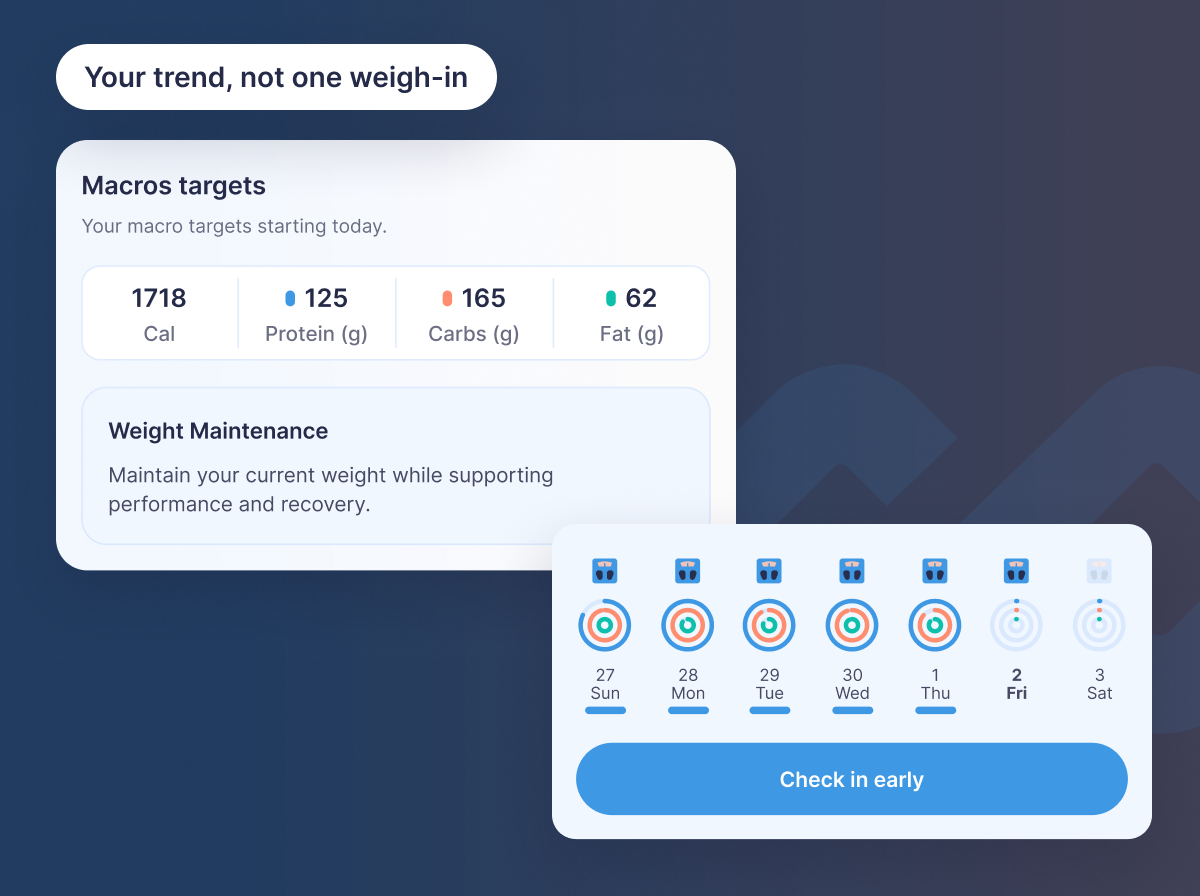
Your weekly check-in looks at your trend and tracking, then holds or adjusts your targets.
Neither habit requires cutting out holiday foods. Both work the same way: they keep you aware of what's happening while it's still small.
How do you maintain your weight through the holidays?
Make maintenance your goal on purpose, then put the two research-backed habits on autopilot. Here's how that looks with Carbon, a macro tracker and nutrition coaching app that adjusts your calorie and macro targets every week based on your progress.
Switch to a maintain weight goal. Your targets are set to hold your weight steady, so a holiday dinner fits the plan instead of breaking it. (How to change to a maintain weight goal)
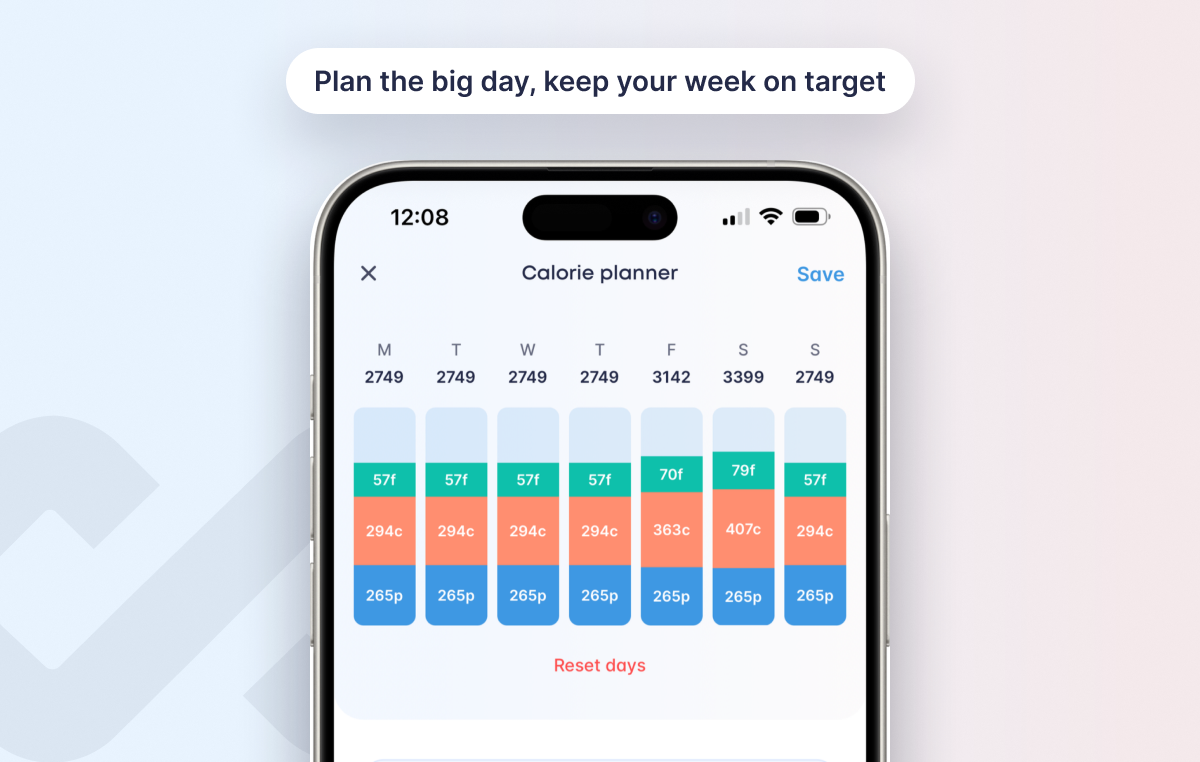
Plan around the big days. Use the Calorie Planner to give Thanksgiving or a holiday party more calories and spread the difference across the rest of your week.
Keep tracking, even on the big days. This is habit #1 from the research. Holiday plates are a little bit of everything, so snap a photo or describe your meal and the Smart Logger builds the entries. You review and confirm everything before it's saved.
Weigh in and watch the trend, not the day. This is habit #2. A salty dinner can bump the scale for a few days. Coach trend weight smooths out those swings, and your progress graphs show the bigger picture. (Tips for weighing in consistently)
Check in once a week. Carbon looks at your weigh-ins and how closely you hit your targets, then holds or adjusts your numbers for the week ahead.
The Calorie Planner gives your big days more room and balances the rest of the week.
No foods are off-limits. Pie counts. Stuffing counts. You track it and keep going.
Frequently asked questions
How much weight does the average person gain over the holidays?
About 0.8 pounds on average in the best-known study, though roughly 14% of people gained more than 5 pounds.
Is holiday weight gain just water weight?
Some of it is. Weight often drops back partway right after the holidays. But studies found about half of holiday weight tends to stay until summer or longer.
Should I try to lose weight during the holidays?
For many people, maintenance is the more realistic goal. Holding steady through New Year's means you start the year where you are instead of making up lost ground.
Do I have to skip holiday foods to avoid gaining weight?
No. The habits that worked in studies were tracking consistently and watching your weight trend, not cutting out specific foods.
How often should I weigh myself during the holidays?
In the University of Georgia study, people weighed in daily and looked at their trend. Daily weigh-ins work best when you focus on the trend rather than any single day.
Hold steady this season
Try Carbon free for 7 days, set a maintain weight goal, and let your coach keep your targets on track through New Year's.
Boutelle KN et al. How can obese weight controllers minimize weight gain during the high risk holiday season? By self-monitoring very consistently. Health Psychol. 1999;18(4):364-368.
John is a National Board Certified Health & Wellness Coach and Certified Strength and Conditioning Specialist who has coached people through fitness, nutrition, and behavior change for nearly two decades, including as a health coach at Vida Health and leading wellness programs at the YMCA. He is VP of Operations at Carbon Diet Coach.